Modern Technology Has Improved Root Canal Treatments
Root canal treatment has long been associated with fear, discomfort, and lengthy dental visits. However, modern dentistry has undergone a remarkable transformation. Thanks to technological advancements, root canal procedures today are faster, more precise, and significantly more comfortable than ever before.
In the past, limited visibility and manual tools made the process more complex and time-consuming. Today, cutting-edge innovations have revolutionised the way dentists diagnose, treat, and manage dental infections. This article explores how modern technology has improved root canal treatments, making them safer, more efficient, and highly successful.
Advanced Diagnostic Tools
One of the most significant improvements in root canal treatment comes from advanced diagnostic tools. Accurate diagnosis is the foundation of successful treatment, and modern technology ensures that dentists can detect problems early and precisely.
Digital X-rays have replaced traditional film-based imaging. They provide clearer images almost instantly and expose patients to significantly less radiation. Dentists can zoom, enhance, and analyse these images for better decision-making.
Another breakthrough is Cone Beam Computed Tomography (CBCT). This 3D imaging technology gives a detailed view of the tooth, root canals, and surrounding bone. It allows dentists to identify hidden infections, complex canal structures, and fractures that may not be visible on standard X-rays. As a result, treatment planning becomes far more accurate and predictable.
Enhanced Precision with Dental Microscopes
Modern root canal treatments often involve the use of dental operating microscopes. These powerful tools provide magnification and illumination, allowing dentists to see even the tiniest details inside the tooth.
Root canals can be extremely narrow and curved, making them difficult to clean and shape using the naked eye. Microscopes help dentists locate additional canals, detect cracks, and ensure thorough cleaning. This level of precision significantly improves the success rate of the procedure and reduces the chances of reinfection.
Rotary Endodontics: Faster and More Efficient
Traditional root canal procedures relied on manual files, which required more time and effort. Today, rotary endodontics has transformed this process.
Rotary instruments are powered by electric motors and made from flexible materials like nickel-titanium. These tools can clean and shape root canals more efficiently and consistently. They adapt better to the natural curvature of the canals, reducing the risk of damage to the tooth structure.
The use of rotary systems not only speeds up the procedure but also enhances patient comfort. Shorter treatment times mean fewer appointments and less time spent in the dental chair.
Laser-Assisted Root Canal Treatment
Laser technology is another game-changer in modern dentistry. In root canal treatment, lasers are used to disinfect the canals more effectively than traditional methods.
Lasers can penetrate deep into the dentinal tubules, eliminating bacteria that conventional tools may miss. This results in a cleaner canal system and a reduced risk of infection after the procedure.
Additionally, laser-assisted treatments often cause less pain, minimal bleeding, and faster healing. Patients benefit from a more comfortable experience and quicker recovery times.
Apex Locators for Accurate Measurement
Determining the exact length of the root canal is crucial for successful treatment. Over- or under-cleaning can lead to complications.
Modern dentistry uses electronic apex locators to measure the length of the root canal with high accuracy. These devices help dentists identify the precise endpoint of the canal, ensuring thorough cleaning and proper filling.
This technology reduces reliance on multiple X-rays and enhances the overall precision of the procedure.
Improved Materials and Filling Techniques
Another area where technology has made a significant impact is in the materials used for root canal treatment.
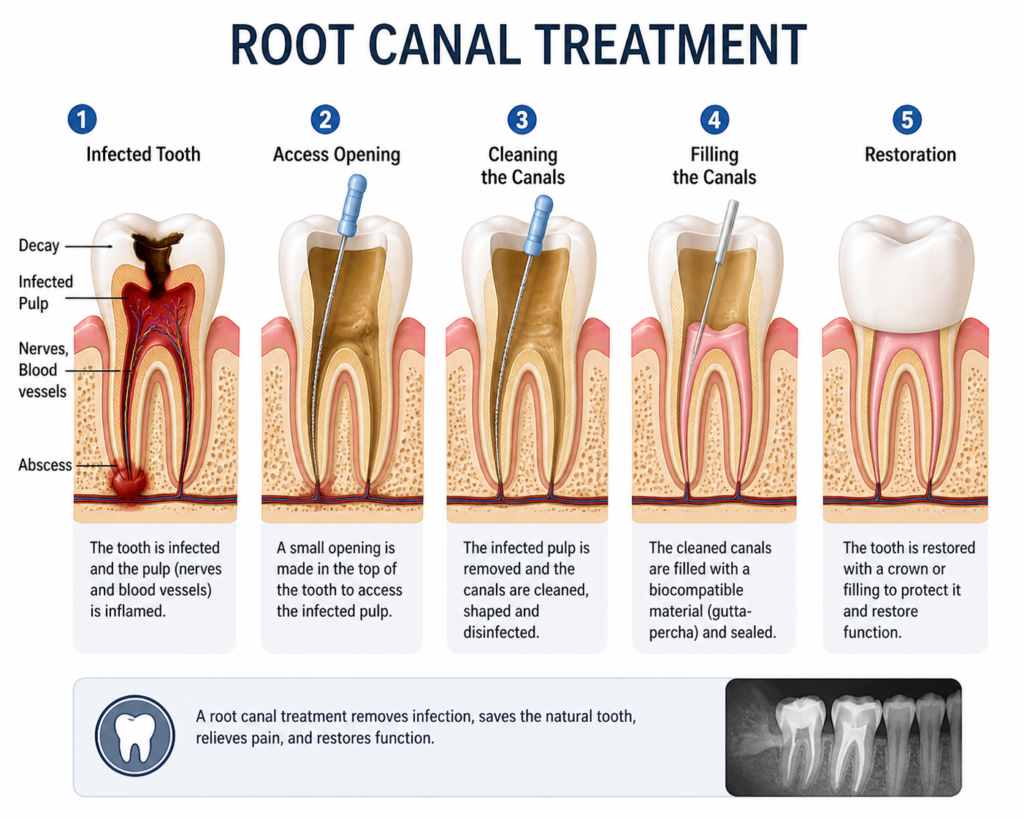
Modern root canal procedures use biocompatible materials that are safe and durable. One commonly used material is gutta-percha, which is used to fill and seal the cleaned canals.
Advanced sealers and filling techniques ensure a tight seal, preventing bacteria from re-entering the canal system. This improves the long-term success of the treatment and helps preserve the natural tooth.
Pain Management Advancements
One of the biggest concerns patients have about root canal treatment is pain. Fortunately, advancements in anaesthesia and pain management have made the procedure virtually painless.
Modern local anaesthetics are highly effective and work quickly, ensuring that patients remain comfortable throughout the procedure. Dentists also use improved delivery systems that minimise discomfort during injections.
In addition, advanced techniques and tools reduce tissue damage, leading to less post-treatment pain and swelling.
Single-Sitting Root Canal Treatments
In the past, root canal treatments often required multiple visits. Today, many cases can be completed in a single sitting, thanks to technological advancements.
Improved diagnostic tools, efficient rotary systems, and better disinfection methods allow dentists to complete the procedure quickly without compromising quality.
Single-visit treatments are especially beneficial for patients with busy schedules, as they reduce the need for multiple appointments and minimise disruption to daily life.
Reduced Risk of Complications
Modern technology has significantly reduced the risk of complications associated with root canal treatment.
Enhanced cleaning techniques, accurate measurements, and better sealing materials all contribute to a higher success rate. The chances of reinfection, incomplete cleaning, or damage to surrounding tissues are much lower compared to traditional methods.
This means patients can enjoy long-lasting results and better oral health.
Improved Patient Experience
Technology has not only improved the technical aspects of root canal treatment but also enhanced the overall patient experience.
Shorter treatment times, minimal discomfort, and faster recovery make the process far less intimidating. Many dental clinics now use digital tools to educate patients, helping them understand the procedure and feel more confident.
Comfort-focused environments, along with modern equipment, ensure a stress-free experience for patients of all ages.
The Future of Root Canal Technology
The future of root canal treatment looks even more promising. Emerging technologies such as artificial intelligence (AI) and robotics are expected to further enhance precision and efficiency.
AI-powered systems may assist dentists in diagnosis and treatment planning, while robotic tools could improve accuracy during procedures. Continued innovation in materials and techniques will make root canal treatments even more effective and patient-friendly.
Cost vs Value of Modern Technology
While advanced root canal treatments may sometimes be slightly more expensive than traditional methods, they offer excellent value in the long run.
Improved accuracy and durability reduce the need for retreatment, saving both time and money. Preserving the natural tooth also eliminates the need for more expensive alternatives like dental implants or bridges.
Investing in modern treatment ensures better outcomes and long-term oral health benefits.